

Hello there! 😀
Remember when you were young? Remember when you had hope? Remember when your right hip wasn’t painful in cold weather?
I’ve never understood people who long to be a teenager again, and I’ve been trying to repress every memory I have between the ages of thirteen and nineteen. That said, there is one thing I remember: my English teacher showing us the difference between the “active” and “passive” voice.
The active voice is when the subject does the thing (“I wrote the Substack post”). It’s clear what is going on and who is doing it. The passive voice is when the thing happens to the subject (“The Substack post was written by me”). You still get the picture, but it feels vague and noncommittal. That’s why writing in the active voice is almost always better, because it forces you to be straightforward and it makes it harder to hide what you mean.1
I’m not going to go full LinkedIn (“what my terminal diagnosis taught me about B2B sales”), but when I was clearing out old stuff from my mum’s garage the other week, I started thinking what my GCSE English textbooks taught me about running a country.
I think if you want to understand why recent governments have been so useless, it’s because they’ve been governing in the passive voice, not the active voice.
We've tried nothing and we're all out of ideas
One of the more popular Simpsons memes is “we’ve tried nothing and we’re all out of ideas.” This sort of explains British governments’ problems, but the key quote is the one immediately before this from the doctor:
You don’t believe in rules and yet you want to control Ned’s anger?
The parents want something to happen, but they’re not willing to do want is necessary to make it happen. They identify the problem (Ned’s behaviour), but don’t want to take the actions required to discipline him.
James Kanagasooriam showed evidence that voters feel a lack of agency in their life. But I think we’re also in the situation where governments themselves act like they have no agency over what happens under their watch.
Some Examples
I don’t doubt that the government wants (in the passive voice) the boats to stop. It would get rid of a huge headache for them and close off one of the most potent attack lines from their opponents on right.
I don’t doubt that the government wants (in the passive voice) the economy to grow. There would be fewer difficult trade-offs, budgets would stretch further and politics would feel less zero-sum.
I don’t doubt that the government wants (in the passive voice) more infrastructure to be built. That would ease pressure on housing, improve transport, make businesses more competitive and give them a visible symbol of progress.
Yet, at the moment, they seem to be to waiting for a deus ex machina to descend from the heavens and sort it out for them. There might be a lucky break just at the right moment, like the global economy getting better or smuggling gangs suddenly deciding they’d rather make their money baking Victoria sponges instead. Maybe if the government just talks about the outcome they want enough (“growth, growth, growth” or “build, baby, build” or “smash the gangs”), it might conjure it into existence.
However, this is where the difference between the active and the passive voice comes in (technically these examples are present-tense matrix clauses containing an infinitival complement with an overt subject, but let’s say “passive” for simplicity):
Wanting the boats to stop is not the same thing as wanting to stop the boats.
Wanting the economy to grow is not the same thing as wanting to grow the economy.
Wanting infrastructure to be built is not the same thing as wanting to build infrastructure.
Stopping the boats (in the active voice) would mean making moves such as amending or scrapping certain legislation, leaving the ECHR, or deploying the navy. That would infuriate most Labour MPs, the party’s liberal-left supporters and high-profile figures in the media, judiciary and NGO-verse.
Growing the economy (in the active voice) would mean implementing big tax reform, major regulation changes or significant shifts in spending. Those that lose out will be very vocal and angry with you, whilst the winners might barely notice.2
Similarly, building infrastructure (in the active voice) would mean overhauling planning laws, overruling local councils, facing down local objections, and prioritising spending with long-term payoffs. That would bring out the “anti-growth coalition” no matter how you define it.

Given this, it’s tempting to retreat into the safety of doing nothing. Action guarantees conflict. Being passive, in contrast, feels safer, because you’re less likely to trigger an immediate backlash if you don’t take decisions.
Nonetheless, just like feeling a funny lump, a problem doesn’t go away if you ignore it. The longer nothing is done, the harder it becomes to fix later. If you avoid taking ownership and refuse to act, the issue festers. By trying not to be unpopular by avoiding anything offensive, you end up becoming unpopular for being weak, evasive and incapable of solving problems people care about.
Why Do My Actions Have Consequences?
Not wanting to do the things that would stop the boats is fine in itself. Leaving the ECHR could damage Britain’s international reputation, using the navy to push back boats would be dangerous for migrants and servicemen, and tougher asylum laws could lead to many being sent to unsafe countries. From a liberal point of view, these are very high costs, so it’s understandable that Labour doesn’t want to pay them.
However, they also don’t or can’t admit that to the public (or itself). Being active voice doesn’t mean you have to stop the boats, but it does mean that you have to deal with the consequences of your belief that you don’t want to stop them. More arrivals mean more demand on housing, the NHS, schools, social services and councils that are already stretched. Without action, the system becomes overwhelmed, communities worse off, resentment grows and outsider political parties rise.
Those can be reduced if you admit your own beliefs, accept their consequences, take responsibility and act accordingly. This would meaning acting to ensure: more housing so people are not put in hotels indefinitely; faster asylum processing so that genuine refugees can settle and those without a case can be removed; and more funding for councils, schools and the NHS to handle increased demand. If the legal or institutional status quo means you can’t do these things (or can’t do them quick enough), you change the system.
“But we wouldn’t get re-elected saying/doing that!”
Well, stop the boats then.
Or make the case why you think the costs of stopping the boats outweigh the benefits (which seems to be what you actually think), whilst acting to prevent the downsides of them continuing to come (which they will, given your non-decision). You might not be re-elected on that, but at least you’ll be being honest with voters (and yourself).
If you want the boats to stop, you actually have to stop the boats. If you reflect on your own values and conclude that you not willing to stop them, that’s an honest and self-aware appraisal of your own mind. However, whilst this would generate celebrations on Bluesky, you then you need to act based on the reality they will keep coming, because normal people will be living with the negative consequences if you don’t.
Instead, we have the worst of all worlds. The boats don’t stop, because the government won’t do what is needed to stop them. At the same time, the system is unprepared for their impact, because the government won’t admit that they’re not actually willing to stop them – or delude themselves that things like one in, one out (or more accurately 180,000 in, one out) will do anything. So we end up with no one getting what they want.
This is not an argument for or against asylum. It’s an argument for governments knowing what they believe, being honest about what they are (and, crucially, are not) willing to do, and then acting accordingly.
“Smash The Gangs” Is Not Smart
Apparently, they’re going to “smash the gangs” instead. To return to LinkedIn, there is a business-school acronym that any goal you set should be:
Specific
Measurable
Actionable
Realistic
Timebound
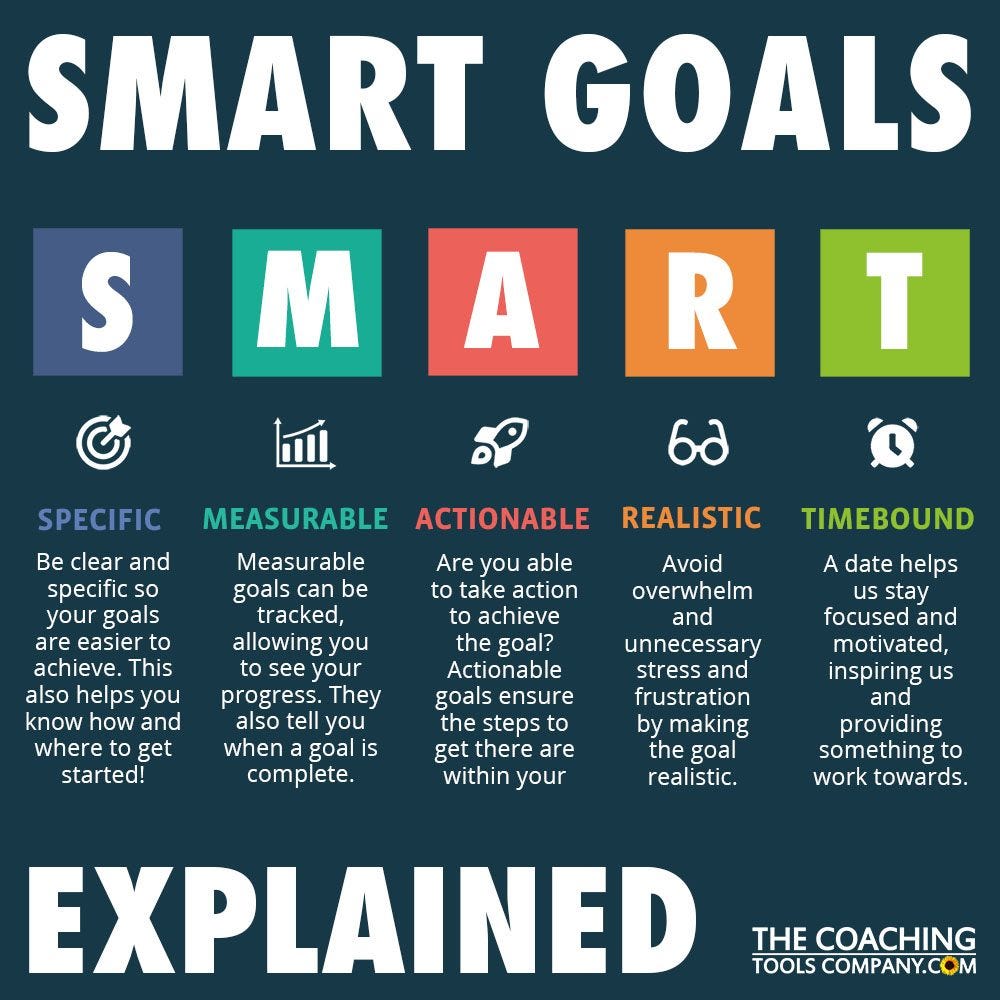
“Smash the gangs” is not specific. What does smashing mean? Prison? Deportations? Taken out with an Apache helicopter? Vague language makes vague policy.
“Smash the gangs” is not measurable. How many gangs? How many convictions? What percentage decline? If you can’t measure it, you can’t know if you’re succeeding or failing.
“Smash the gangs” is not actionable. What levers are ministers supposed to pull to make this happen? What agencies need more powers or money? To what extent is international cooperation required?
“Smash the gangs” is not realistic. International gangs have existed for decades/centuries, shifting between drugs, weapons, people smuggling and whatever else pays. The idea that you will suddenly “smash” them is a fantasy.
“Smash the gangs” is not time-bound. When will this smashing be complete? Next year? Next parliament? Ten years from now? A new “forever war”? It’s impossible for the public to know when to judge the government.
So the slogan fails every test. It’s worse than noise, because it creates the illusion of seriousness without doing anything concrete.
The Unaccountability Machine
In The Unaccountability Machine, Dan Davies argues that modern institutions suffer from “accountability sinks.” These are where decision-making is handed off to faceless rulebooks, algorithms or distant bodies. When things go wrong, no individual is ever held responsible. It’s what passive voice government looks like in practice:
“The system required it”
“That’s just how the process works”
“Mistakes were made” rather than “I made mistakes”
This accountability sink is seductive for institutions and politicians, because it allows them to hide or deflect blame (see, for example, how no individuals seem to be being held to account for the grooming gangs scandal). Davies notes that some form of institutional system is unavoidable in complex societies, but the challenge is building systems equipped for responsibility, feedback and adaptation.
Any attempt to achieve big, decisive things in government would therefore require large institutional changes. The civil service would need to be overhauled so that it responds quicker, adapts faster and performs better, which means not just urging efficiency but changing incentives, leadership and accountability structures. This has consistently been the argument of Dominic Cummings and was the conclusion of a recent report on state reform by Labour Together.
Many powers have been farmed out to quangos and other unaccountable bodies, so governments are effectively powerless to deliver much of what they promised. However, governments since 2019 have all had large majorities, so they could they wrestled back control if they wanted to.
Instead, the easier thing has been to do nothing, say “nowt to do with me, mate” and complain after leaving office about how powerless you always felt.
Don’t Say You Weren’t Warned
The strange thing is that the last Conservative government made the exact same mistakes, so Labour in opposition (literally) had a front row seat of how not to do it.
The Conservatives would keep making promises to prevent further electoral losses. This raised public expectations that the issue would be sorted out. Then, through inaction or incompetence, they would fail to deliver. As a result, voters would look for alternatives. Desperate to stem the bleeding, the party would then make yet another promise, starting the cycle all over again.
This happened on immigration, the NHS, tax, economic growth and basically everything else. As I argued in my first Substack post, this created:


One popular argument on Bluesky goes something like, “Yes, humanity built the Large Hadron Collider, landed a man on the moon and eradicated smallpox – but it’s simply impossible to stop dinghies crossing a 21-mile stretch of water.”
Notwithstanding that, I’m going to go out on a limb and say that it is operationally, logistically, physically and (with changes) legally possible to stop the boats. It might be controversial, expensive, require a big political fight, some big legislation and an unparliamentary level of competence, but it’s obviously not “impossible.” Just because you don’t want something to happen, doesn’t mean it can’t happen. The only things that are impossible are things which break the laws of physics, so unless the plan involves travelling faster than the speed of light, it can be done.
To break the valance doom loop and be an active voice government on any issue (not just boats), I think you need to do all of the following:
Have a clear idea of your desired outcome and be committed to delivering it (including being willing to do things that are unpopular)
Have a realistic understanding of how the levers of power actually work (and don’t work)
If you know those levers of power will be unresponsive, make the necessary legislative changes and/or structural reforms to the civil service
Develop (with your newly reformed state apparatus) a coherent plan of implementation in order to achieve your desired outcome
Hire people with experience of successful project management and operations, and give them the freedom to get the job done
That’s easier said than done, obviously, but it can be done. The last government did this with the Covid vaccine, after all, but nothing else.
Labour had five years of watching this play out and could have prepared themselves not to make the same mistakes. Instead, they seemed to think the problem was simply that those nasty Tories had been meanie heads to our “Rolls Royce” civil service. Labour’s implicit theory was that if they came in and were nice to them, the very same levers and knobs that had failed for the Conservatives would suddenly start working for them. Now, they finally appear to be realising that there are deep structural problems in the civil service which need reform, but it might be too little too late.
An Actually Difficult Task
To be fair to Rachel Reeves, growing the economy really is a difficult task even if you’re committed to actually doing it.
Growth depends on a huge mix of factors, many of which are outside the control of the UK government. The complexity of economics means it’s uncertain whether what you do will work or the magnitude of its effect. Plus, even the best reforms can be unpopular at the time of implementation. By the time the benefits show up, the government that introduced the changes may have already been voted out.
But, Reeves frames almost every decision as though she is a reluctant participant in forces beyond her control: I’m doing this even though I don’t want to.
That may well be true, but it hardly inspires confidence. It suggests she doesn’t believe in her own programme and denies voters any reason to believe in it either. Even if the policies succeed, people will reasonably ask why they should give you the credit when you yourself told us you didn’t want to do them in the first place.
I always roll my eyes at talk that a government’s problem is that it doesn’t have a “narrative” (I think it’s a sign that political parties hire too many humanities graduates who think language – rather than, you know, doing stuff – is what matters). However, governing in the active voice inherently creates a story people can follow:
This is a major problem I have identified
This is the decision I have made in order to solve that problem
This is the action I am taking based on that decision and I will do whatever is needed in order to achieve it
This is the tangible outcome that has been achieved based on that action
Problem. Decision. Action. Outcome.
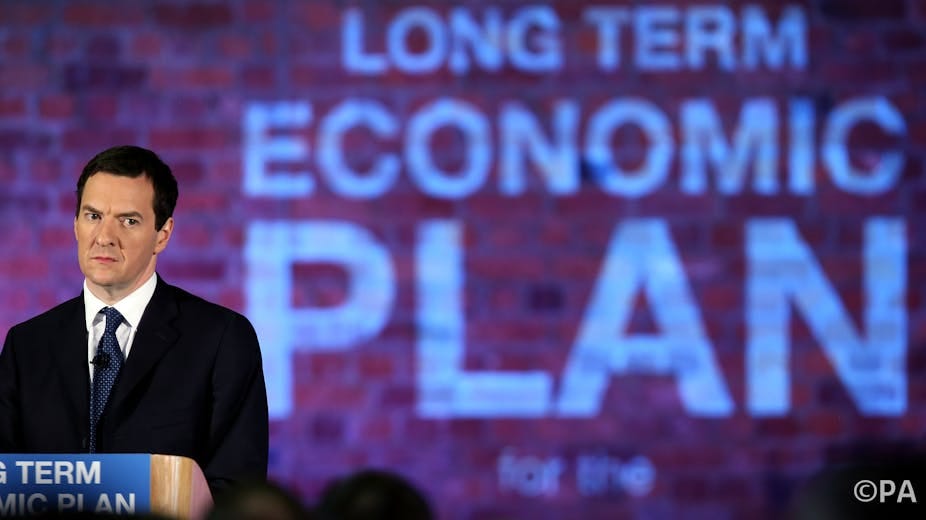
You can claim credit even when the causal link is dubious! Think of Conservative austerity between 2010 and 2015. They said the problem was a ballooning deficit, they promised to bring it down, they carried out cuts, and when the economy grew they won re-election claiming “our long-term economic plan is working.”
Economists still argue about whether austerity helped or hindered the recovery, but politically the Conservatives were rewarded because they could plausibly say they had acted on a problem they identified and delivered on a promise they made.
Crucially, though, it isn’t enough to just announce or even pass legislation, just look at the Joe Biden presidency. In 2021 he signed a $1.2 trillion Infrastructure Investment and Jobs Act. Sounds a lot of money, right? Surely this transformed the US economy?
But less than 17% of that amount had actually been spent by April 2024 and less than 50% had even been allocated by the time he left office.
Anyone can stand at a lectern, announce a headline figure, pass a piece of legislation, or pose with a giant cheque. It looks impressive in the moment, but unless it filters down, it’s politically worthless. Outcomes are what matter, because tangible results are what people notice and remember.
To get those, you don’t need “a narrative,” you need a state that works, that can push money out of the Treasury and into actual projects on the ground. It’s a boring, grinding, unsexy, non-headline grabbing administrative side of politics, but it’s the part that decides whether a government looks competent or hopeless.
Active Voice Government Doesn’t Necessarily Mean Active Government
Active voice government doesn’t necessarily mean active government. Even if you want to reduce taxes, spending and regulation, you still need to proactively reduce taxes, spending and regulation. These won’t happen passively, it requires someone to actively do something in government to make a change.
This carries hazards and Liz Truss is a perfect case study. She was particularly electorally damaging, because of what was happening globally in 2022: post-lockdown supply shocks, energy spikes after Russia’s invasion of Ukraine, and inflationary pressures across the developed world.
There was a case that the pre-Truss economic pain was a passive voice problem, since economies around the world and governments of all stripes were all being hit. Truss’s mistake was to turn that into an active voice problem. Through incompetence and bad timing, she made voters feel that “you alone made the economy worse by your actions.” That shift in perception was brutal, as the downturn became so personally tied in people’s minds (and bank accounts) to a Conservative Prime Minister.
FDR was an Active Voice President
Franklin Roosevelt was one of the clearest examples of an active voice president. Just take a few lines from his 1933 Inaugural Address:
This is preeminently the time to speak the truth, the whole truth, frankly and boldly. Nor need we shrink from honestly facing conditions in our country today.
Small wonder that confidence languishes, for it thrives only on honesty, on honor, on the sacredness of obligations, on faithful protection, on unselfish performance; without them it cannot live. Restoration calls, however, not for changes in ethics alone. This Nation asks for action, and action now.
This is no unsolvable problem if we face it wisely and courageously.
It is to be hoped that the normal balance of Executive and legislative authority may be wholly adequate to meet the unprecedented task before us. But it may be that an unprecedented demand and need for undelayed action may call for temporary departure from that normal balance of public procedure.
But in the event that the Congress shall fail to take one of these two courses, and in the event that the national emergency is still critical, I shall not evade the clear course of duty that will then confront me. I shall ask the Congress for the one remaining instrument to meet the crisis: broad Executive power to wage a war against the emergency, as great as the power that would be given to me if we were in fact invaded by a foreign foe. For the trust reposed in me I will return the courage and the devotion that befit the time. I can do no less.
FDR named the problem, promised urgency and said openly that if the normal machinery of government slowed him down, he was willing to take matters into his own hands. If the issue demanded extraordinary power, he would use it. He promised he would do whatever it took and to own the consequences. No ambiguity, no retreat into passivity and no such thing as an “unsolvable problem.”
In the First Hundred Days, Roosevelt rammed through a blizzard of legislation. He didn’t wait for confidence to restore itself, he created agencies, passed laws and flooded the system with action to create that confidence himself.3
In his fireside chats, Roosevelt didn’t hide behind passive language or say “these are difficult circumstances beyond my control.” He got on the radio, explained the problem in plain English, and told people what his government was doing. That is active voice not just in policy but in communication.
Not everything worked and his 1937 court-packing plan ultimately failed. However, it still put pressure on the Supreme Court to uphold more of the New Deal. It also signalled clearly to voters that he was on their side rather than side of preserving “the institutions.”
All of these are what active voice government looks like: taking risks, using your power, not being politically conflict averse, being willing to create losers or to become unpopular, and pushing forward things you want to do. Here is the end of an FDR speech from 1932 which could be made today about any number of issues, regardless of whether you want the left/liberal or right/conservative outcome:
It is toward that objective that we must move if we are to profit by our recent experiences. Probably few will disagree that the goal is desirable. Yet many, of faint heart, fearful of change, sitting tightly on the roof-tops in the flood, will sternly resist striking out for it, lest they fail to attain it. Even among those who are ready to attempt the journey there will be violent differences of opinion as to how it should be made.
So complex, so widely distributed over our whole society are the problems which confront us that men and women of common aim do not agree upon the method of attacking them. Such disagreement leads to doing nothing, to drifting. Agreement may come too late.
Let us not confuse objectives with methods. Too many so-called leaders of the nation fail to see the forest because of the trees. Too many of them fail to recognize the vital necessity of planning for definite objectives. True leadership calls for the setting forth of the objectives and the rallying of public opinion in support of these objectives.
Do not confuse objectives with methods. When the nation becomes substantially united in favor of planning the broad objectives of civilization, then true leadership must unite thought behind definite methods.
The country needs and, unless I mistake its temper, the country demands bold, persistent experimentation. It is common sense to take a method and try it. If it fails, admit it frankly and try another. But above all, try something.
The millions who are in want will not stand by silently forever while the things to satisfy their needs are within easy reach.
We need enthusiasm, imagination and the ability to face facts, even unpleasant ones, bravely. We need to correct, by drastic means if necessary, the faults in our economic system from which we now suffer.
We need the courage of the young. Yours is not the task of making your way in the world, but the task of remaking the world which you will find before you. May every one of us be granted the courage, the faith and the vision to give the best that is in us to that remaking!
When was the last time your heard the stuff I put in bold from a modern politician?
Well, ok, maybe there is one…
Trump is an Active Voice President
Before you hit unsubscribe and try to cancel me, hear me out. Trump, in his second term so far, is clearly an active voice president. He identifies what he sees as problems, hammers home what he dislikes about the status quo, promises to do something big, and then is willing to use/expand his power to get it.
“TACO” (Trump Always Chickens Out) is a comforting lie his critics tell themselves. Look around you! Compare how things are today to how they were this time last year, or before he was first elected in 2016. Things haven’t changed as much as Trump said they would, but they’ve changed far more than any other president in my lifetime.
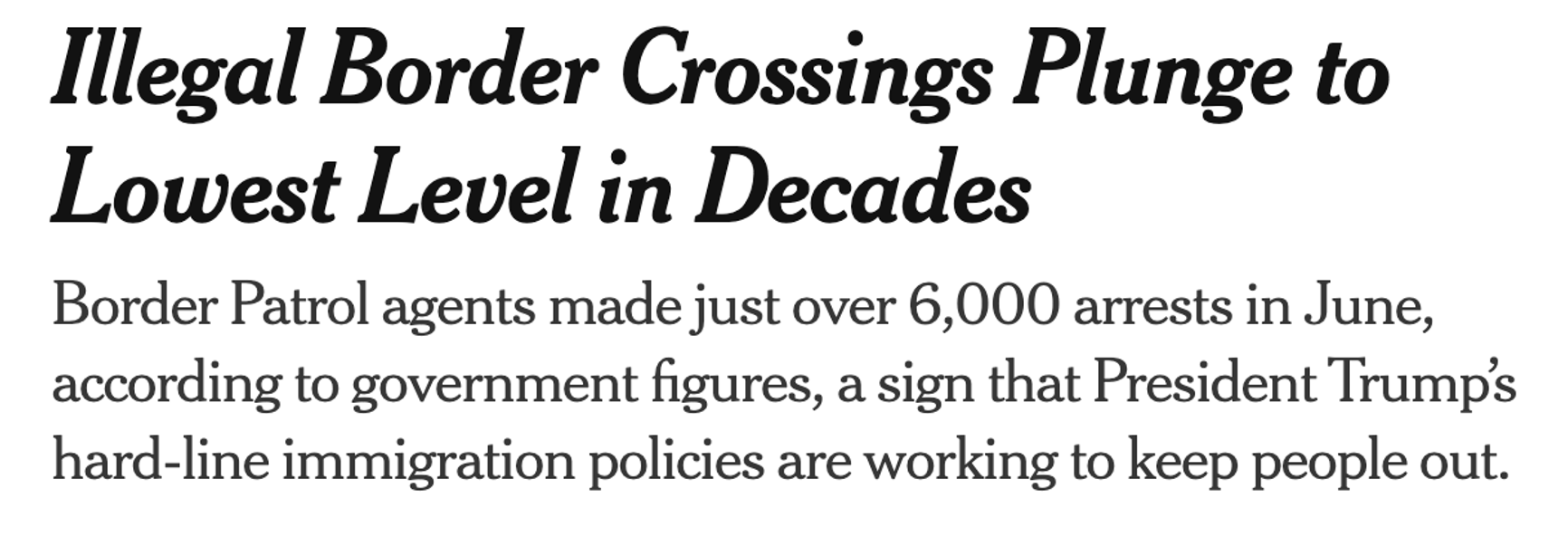
Trump said “mass deportations” during the 2024 election campaign openly and clearly, there was no hiding. Instead of complaining once in office that it was “impossible” or “too difficult” or even “the deep state won’t let me do it,” he is using and expanding government power to try to deliver it. You may despise the means/ends, or you may think he’s the greatest thing since sliced veg. Either way, all should be able to see that he is governing in the active voice.
From the “anti-populists,” the message is always the same: who/what you vote for doesn’t matter, you’re not going to get what you want, lower your expectations, be grateful for our management of your country’s decline, and don’t you dare get uppity with us.
But then a Trump or FDR comes along and just does stuff. And because they keep pushing, they actually get a lot of what they said they would – enough that you can see a connection between words and actions, at least.

The Case for Active Voice Government is Made by Me
The point, though, is that the active voice option is – and always was – open to all governments whether economically left-wing, economically right-wing, socially conservative, socially liberal, centrist, populist or miscellaneous. The problem was/is that they chose instead to impose passive-voice government onto themselves.
Saying “I didn’t do what I was elected to do because a lawyer told me I couldn’t” is not proof that you’re a virtuous guardian of the rule of law. It’s an admission that you waved the white flag at the first sign of difficulty and let your voters down. You are a rich tea biscuit, when you should be a hobnob.
Railing against the illegality of actions by active voice governments you don’t like is not enough. If the alternative to their overreach is your passivity, then you can’t really blame voters for choosing the person who actually acts. “Populists just offer easy solutions to complex problems” is a very lame comeback, given that you are offering no solutions in response.
If voters consistently say they want something and it matters to them, that is a signal you can afford to break some eggs to try to deliver it. If the results broadly line up with what you said, you are likely to be rewarded regardless of the means.
You then get to go into re-election saying, “Look at all the things that people said I couldn’t do, but which — thanks to my determination to put your wishes above any constraints I faced — I was actually able to deliver.”
Recently, Anthony Seldon wrote that “a core lesson [from failing prime ministers] is to promise only what you know you can deliver.” However, there are two ways to read that:
The machinery of the state is slow and incompetent, that is never going to change, so keep your ambitions small. Promise only what this sluggish system can churn out in five years. You won’t achieve anything meaningful, but you get to have a soak in the “tepid bath of managed decline” for a bit.
The machinery of the state is slow and incompetent, but that can change if you are willing to reform it. If you take on the bureaucracy and make it faster, leaner and more effective, then you can promise bigger things because you can actually get them done. Don’t shrink your vision to fit a broken system, fix the system so it can match a bigger vision.
Instead, in the UK, Labour and the Conservatives will have to go into the next election saying, “I know we were crap and didn’t do anything positive when we had the chance, but Farage doesn’t have… errr… experience in government (or something) and will be just as bad.”
But you can’t make a competence argument from a position of incompetence. And you are in a position of incompetence because of your passive voice governing.
Not my words, Carol, the words of George Orwell: https://themindcollection.com/orwells-writing-rules/
For the psychological reasons why losses are felt more acutely than gains, see: Kahneman, D. & Tversky, A. (1979). "Prospect Theory: An Analysis of Decision under Risk". Econometrica. 47 (4): 263–291
Anthony J. Badger, FDR: The First Hundred Days. Macmillan, 2009.
The boats are 5% of total immigration to the UK.
Anyone (including the prime minister) who yammers about them either doesn't understand this fact, or is lying in order to pander to others who don't.