

Hello there! 😀
With a new British Prime Minister likely incoming in the next few months, there’s been endless discussion about what our future Dear Leader should do. However, what policies a political leader should enact in office is only half the story. The equally important, but largely ignored, question is how they can implement what they want to do.
It’s very easy to say you want growth, growth, growth / to smash the gangs / to stop the boats / to change the electoral system / to rejoin the EU / mass deportations / to nationalise water companies / a toilet made out of solid gold. It’s much harder to work out how you politically, operationally, bureaucratically, legally and logistically push through such change.
If you want to understand how governments can successfully do big stuff, who should you listen to?
Probably not academic theorists explaining the ideal implementation model in the abstract. Probably not some former politician whose grandest achievement was announcing the announcement of a future announcement. And probably not some random Substacker whose public-sector experience amounts to two chair-moistening1, lanyard-wearing2 and mouse-wriggling3 years at NHS England.4
It makes more sense to study politicians who successfully accomplished transformative change in office. Whatever you think of the substance of their reforms, they showed they could overcome the constraints that every government collides with: bureaucratic inertia and incompetence, organised interest groups, legal challenges, vested interests, media hostility, opposition party scrutiny, and nervous colleagues in their own party.
One of the best examples of this is someone you might not have heard of.
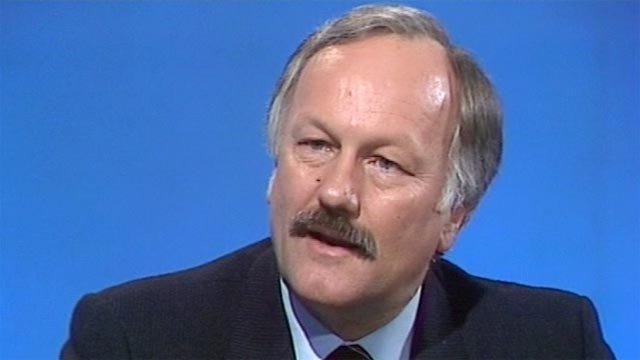
In 1993, former New Zealand finance minister Roger Douglas wrote Unfinished Business, a book explaining how he carried out structural economic reforms in the 1980s.5 Although Douglas is associated with market liberalisation (“Rogernomics”), his book is a practical guide to the mechanics of change in the real world. The methods he describes can, in principle, be used by governments of any stripe: economically left-wing or economically right-wing, socially liberal or socially conservative. It’s about answering how governments can achieve change before political resistance, institutional drift and internal hesitation kill reform off entirely.
Rogernomics
During the post-WWII period, New Zealand governments of both major parties managed the economy in a highly regulated and protected manner, where the state played a central role. From 1975 to 1984, New Zealand’s prime minister was Robert Muldoon of the centre-right National Party. Muldoon was an economic nationalist who used wage and price controls, tariffs, subsidies and large state-backed industrial projects to try to deal with the economic crises (mainly Britain’s entry into the EEC and the 1973 and 1978–79 oil crises) that were making that old settlement harder to sustain. By the early 1980s, inflation remained high and growth remained low, and in 1984, Muldoon (whilst drunk!) announced an election.6
Unsurprisingly given that context, the opposition Labour Party, led by David Lange, won. However, Labour’s campaign did not clearly foreshadow the scale of the economic revolution that would follow. They campaigned as the party of “change” but its public messages on the economy were mixed and a bit vague.7
Once in government, Lange appointed Roger Douglas as Minister of Finance. In Douglas’s own account, he had come to believe that the old Labour means (protection, subsidies, public ownership and direct controls) were no longer achieving the Labour ends of helping lower-income New Zealanders. His reforms, therefore, went well beyond anything most voters would have expected from Labour’s manifesto. The new government devalued and floated the New Zealand dollar, deregulated financial markets, deregulated business more generally, removed subsidies, reduced import protection, introduced a Goods and Services Tax (GST), cut and simplified income taxes, and privatised state-owned industries.
Over the course of a few years, New Zealand rapidly went from having levels of state intervention and regulation “unparalleled in any other developed Western economy”8 to being one of the most market-oriented economies in the world.9 New Zealand had its own Thatcherite/Reaganite economic revolution… but delivered by a Labour government!
It doesn’t matter whether you think Douglas’s reforms were good or bad, the point is that Douglas was someone who entered government and forced through large change. He didn’t just tinker around the edges, he fundamentally altered the political economy of an entire country in the space of a few years.
At the end of Unfinished Business, he outlines ten practical lessons for anyone in government who is serious about getting big things done and sorting out a country’s structural problems (free abridged versions are available here and here).
There are a few countries I can think of that might need to learn these lessons right now, before it’s too late…

🚨DISCLAIMER: Douglas is not offering a campaign manual for winning elections from opposition. His principles are a guide to using power once you already have it, and getting re-elected from that position.🚨
1. For quality policies, you need quality people
Douglas starts by arguing that governments rise or fall on the intellectual and moral quality of its personnel. If the people at the centre of decision-making are trapped by old orthodoxies, policy will be stale. If they are highly-skilled, honest, analytically serious and imaginative, they can diagnose problems more clearly and develop better solutions.
“Policy starts with people. It emerges from the quality of their observation, knowledge, analysis, imagination and ability to think laterally so as to develop the widest range of options. Replacing people who cannot or will not adapt to the new environment is pivotal.”
Good policy does not appear out of thin air, but nor is it produced by one individual sitting alone in a room. It emerges from teams of capable and virtuous people. The major culprits for this not happening, Douglas says, are political parties who recruit from a narrow and closed gene pool, rather than people with independent judgement or real-world achievement. Over time, politics fills with careerists, factional operators, professional insiders and a generally homogeneous class of conventional thinkers who all know the same people, speak the same language and mistake their shared assumptions for wisdom.
“The biggest problem in New Zealand, however, is the calibre of the people attracted to and selected for political candidacy of both the Labour and National Parties. In a two-party system, the public interest cannot be met unless both parties adopt a broad spectrum approach that is widely representative of the community.”
Douglas doesn’t reduce everything to the individual, though. One of his central themes is that institutions shape behaviour. Talented people become passive inside systems that punish initiative and reward caution. Equally, people can improve dramatically once incentives are aligned, objectives become clear and decision-makers are given genuine responsibility. What looks like personal failure is often structural failure.
“Getting the incentives and structure right can also transform the performance of many dynamic and capable people who were not able to achieve the right results under the old system.”
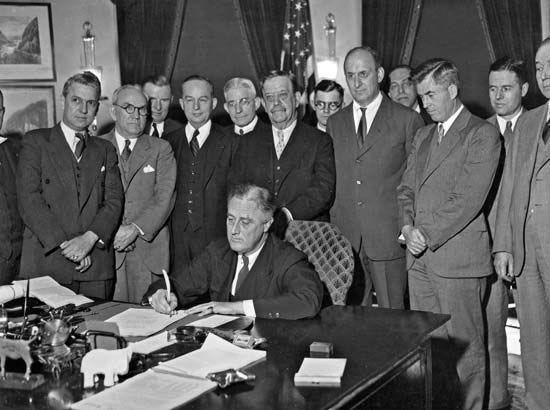
When Franklin Roosevelt entered office in 1933, rather than rely only on party insiders or traditional Washington figures, he assembled a loose circle of academics, lawyers and policy thinkers who rapidly developed new ideas for economic recovery. His “Brain Trust” helped supply ideas and intellectual energy for early New Deal measures, and FDR allowed them the freedom to innovate and try new things. Their work produced banking reform, financial regulation, public works programmes, agricultural policy and the expansion of federal responsibility for economic stability.10
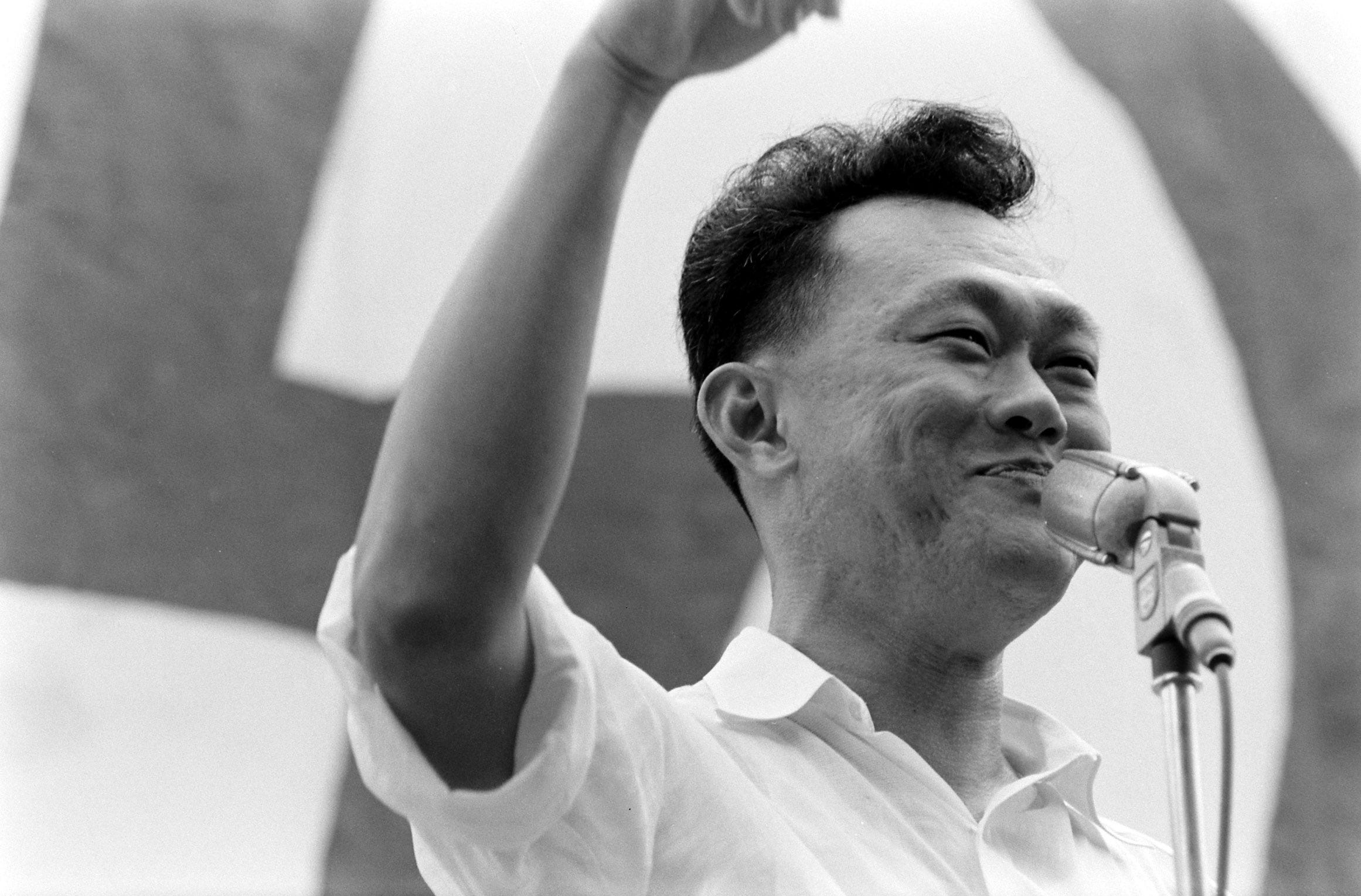
Lee Kuan Yew was Singapore’s founding prime minister, serving from 1959 to 1990, and when asked what explained Singapore’s success, he almost always returned to the same answer: the quality of the people running the state. Lee believed that good government was downstream of recruitment.11 In his book From Third World to First, Lee describes how obsessively he searched for talent. He recalls identifying promising students and civil servants early, tracking them for years, and then bringing them into government once they had proven themselves. Once people like this were in place, micromanaging became both unnecessary and actively counterproductive.12

During Covid, the UK Vaccine Taskforce was deliberately operated outside the normal civil service machinery and was led by people with operational and scientific expertise. Kate Bingham, who chaired the taskforce, came from venture capital and biotech investing rather than the Whitehall career ladder. Her team drew heavily from industry, pharma and logistics, bringing together people who had actually built supply chains, negotiated contracts and scaled complex technical operations before. Whatever you think about the rest of Britain’s pandemic response, the UK approved and deployed vaccines ahead of EU countries and became the first Western country to administer an approved Covid vaccine in December 2020.13
2. Implement reform in quantum leaps, using large packages
The groups that gain from existing arrangements know exactly what’s at stake and are highly motivated to defend it. While the people who bear the costs of the dysfunctional status quo are numerous, they are scattered and often only marginally affected individually. Because of this asymmetry, Douglas argues incremental structural reform is the hardest path politically. Each small change creates a concentrated group of opponents with a clear grievance, while the beneficiaries of changes remain too diffuse to become an effective constituency.
“Such groups are usually well organised. They usually scream blue murder if anyone threatens to remove their privileges. They are capable of mobilising quite powerful opposition against reform. The problem is that the cost of protection, however large in total, is relatively small per person per item. It is widely dispersed across the rest of the economy and often invisible to the people paying the bills. Therefore, they are weak and disorganised allies of reform at best. At worst, their ignorance may be exploited by the interest groups in campaigns to convince them that reform will damage the general interest.”
His solution is to implement reform in large packages of big changes introduced simultaneously. Although each group may lose some privileges, it can’t claim it’s being unfairly targeted. Each group also starts to gain from the removal of privileges enjoyed by others, giving it a stake in the success of the wider programme.
“It is also harder to complain about damage to your own group when everyone else is suffering at least as much, and you benefit from their loss. Whatever its own losses, each group has a vested interest in the success of the reforms being imposed on all the other groups.”
Large packages also make reform easier to justify to the public, because they create a stronger sense of reciprocity and fairness. Voters are often willing to accept disruption, but only if they believe the burden is being shared broadly rather than concentrated on a handful of people. A government can therefore defend a sweeping package as a new and general settlement, rather than having to explain a succession of arbitrary attacks.
“Large packages provide the flexibility needed to demonstrate that the losses suffered by any one group are offset by worthwhile gains in other areas for the same group. The public will take short-term pain, if the gains are spelt out convincingly and the costs and benefits have been shared with obvious fairness across the community as a whole.”

This is one reason why Labour’s decision to means-test Winter Fuel Payments became so unpopular. The policy looked like a single, isolated change imposed on a specific group. It was not presented as part of a wider reform of pensions, welfare or public spending in which different groups were both gaining and losing. Nor was there any story about what medium-term improvement this short-term pain would help deliver.
The same logic also explains why the demands from WASPI women have struggled to command public sympathy. The equalisation of the state pension age can be defended as a move towards a more general and equal rule, which Douglas shows is usually easier to justify. A campaign for compensation, by contrast, looks like an attempt to create an exception for one group demanding special treatment because they forgot to follow the news.
There is nothing inherently sympathetic or unsympathetic about pensioners. What matters politically is whether their treatment appears fair, non-arbitrary, and that they are not being singled out for pain or privilege.
Britain’s VAT system is a good example of how piecemeal policymaking creates endless political conflict. Every exemption creates a concentrated group that benefits from a privilege and therefore has a strong incentive to preserve it. There’s a reason why Jaffa Cakes wants you to think it’s a cake (which are zero-rated) and not a biscuit (which are standard-rated).14 The result is that governments repeatedly stumble into controversies such as the “pasty tax” where they alter a single category and immediately encounter an intensely motivated opposition that can present itself as uniquely victimised.
Douglas’s approach suggests that the most politically viable settlement may not be to add or remove individual exemptions, but to abolish all of them at once and apply VAT uniformly. Such a reform would undoubtedly create losers, but Douglas’s point is that they would object far less because no single group could plausibly claim it was being singled out. There would be no such thing as a “pasty tax” because VAT would simply become the tax paid on all goods and services. If one industry later sought an exemption, every other industry would have an incentive to oppose it to stop them getting an unfair advantage not enjoyed by anyone else.
In physics, this resembles what are known as “emergent properties”. The idea is that when lots of things interact, the result can be very different from what you would expect by just looking at each individual part in isolation. A traffic jam is not something any individual driver intends to create, but emerges from thousands of drivers all responding to one another at the same time.15
A package composed entirely of individually unpopular measures can be collectively popular if voters perceive fairness, reciprocity and a coherent direction of travel. The popularity is not located in any single reform, it emerges from the interaction of all of them together. Viewed separately, taxing pasties, Jaffa Cakes and tampons etc. would each be politically toxic. Viewed together as part of a broader settlement where everyone plays by the same rules, they can become far easier to defend.
Similarly, a package composed entirely of individually popular measures can be collectively unpopular if voters perceive it as incoherent, unfair or lacking any larger purpose. This was David Axelrod’s complaint about Labour’s 2015 offer, which he derided as “Vote Labour and win a microwave”, meaning he saw it as a bundle of retail policies that failed to add up to a convincing programme for government.16
3. Speed is essential. It is almost impossible to go too fast
During large-scale structural reform, the disruption arrives immediately, but the improvements arrive later. Every major change creates a period of time in which the public only feels the costs and not yet the benefits. The danger is that…
🚨🚨🚨🚨🚨🚨🚨🚨🚨🚨🚨🚨🚨🚨🚨🚨🚨🚨🚨🚨🚨🚨🚨🚨🚨🚨🚨🚨🚨🚨🚨🚨🚨🚨🚨🚨🚨🚨🚨🚨
🚨🚨🚨🚨🚨🚨🚨🚨🚨🚨🚨🚨🚨🚨🚨🚨🚨🚨🚨🚨🚨🚨🚨🚨🚨🚨🚨🚨🚨🚨🚨🚨🚨🚨🚨🚨🚨🚨🚨🚨
Excellent piece.
One key point that explains why a labour politician implemented these reforms is Douglas felt strongly that widespread subsidies, protections, and price controls were unfair “privileges” to favoured groups, and that by removing them he was creating a fair playing field.
This is a really brilliant article, thank you!